If you run a single hotel, keeping on top of Google reviews is still manageable: you know your guests, you have a clear picture of what's going on, and you can respond yourself. With a chain of five, twenty, or a hundred locations, that model simply doesn't hold up. Each property has its own team, its own daily routine, and usually its own ad-hoc approach to reviews.
In practice, this creates a fragmented review landscape. One location actively collects reviews because the front desk happens to ask. The next one doesn't, not out of indifference, but because nobody has been explicitly put in charge of it. Within the same brand, you end up with one property sitting at 4.8 stars next to another at 3.9. For guests who compare options, that's a visible gap. For head office, it often stays invisible, because there's no shared overview to speak of.
For chains, this is more costly than it is for independent properties. A single weak Google profile is a local problem. For a chain, it reflects on the entire brand: guests who have a bad experience at one property unconsciously carry that impression over to the others, even if those are objectively better. The reverse is equally true. A single flagship hotel can't compensate for the weaknesses of the others when every location is found separately on Google.
The answer, though, isn't to force the same template onto every location. Each hotel has its own identity, its own target audience, and often its own language. What chains actually need is something different: a clear picture of how reviews are developing across locations and where there are outliers in either direction. Underneath that, a system that works locally without head office having to manage every single guest interaction.
The most common mistake when rolling this out is trying to switch all locations over at the same time. A more pragmatic approach is to start with a pilot property: one location tests the system, the team builds experience, and head office can see how the review numbers develop. Only then does the rollout extend to further properties. That keeps the effort manageable, and each property can follow at its own pace.
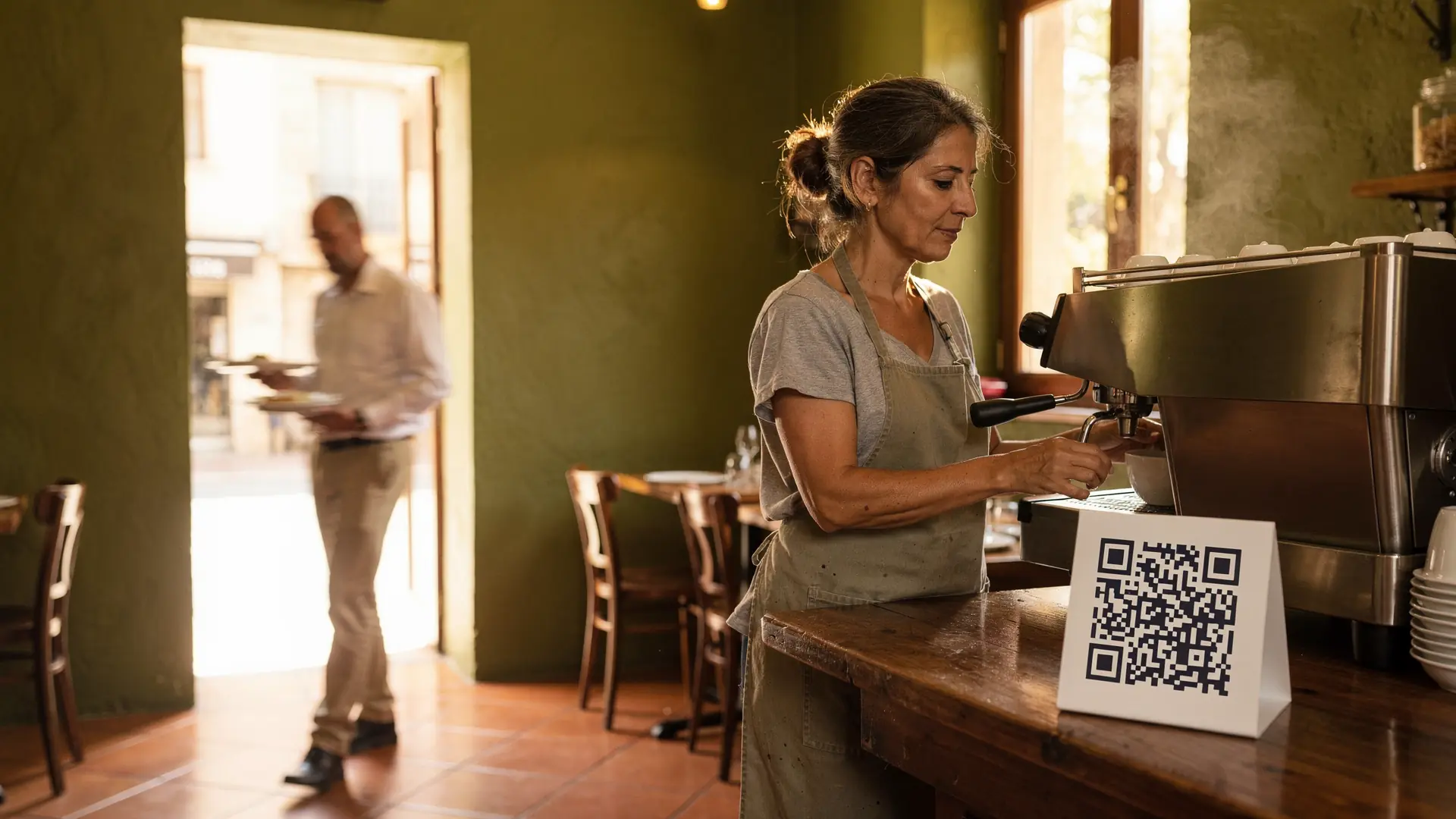
That's exactly what Veridaro is built for across multiple locations. Every package includes one location, and each additional one is added individually. A single property can get started, and others follow when their teams are ready. Each location gets its own QR code and its own Google link, all managed from one account.